
Drill guides
_____
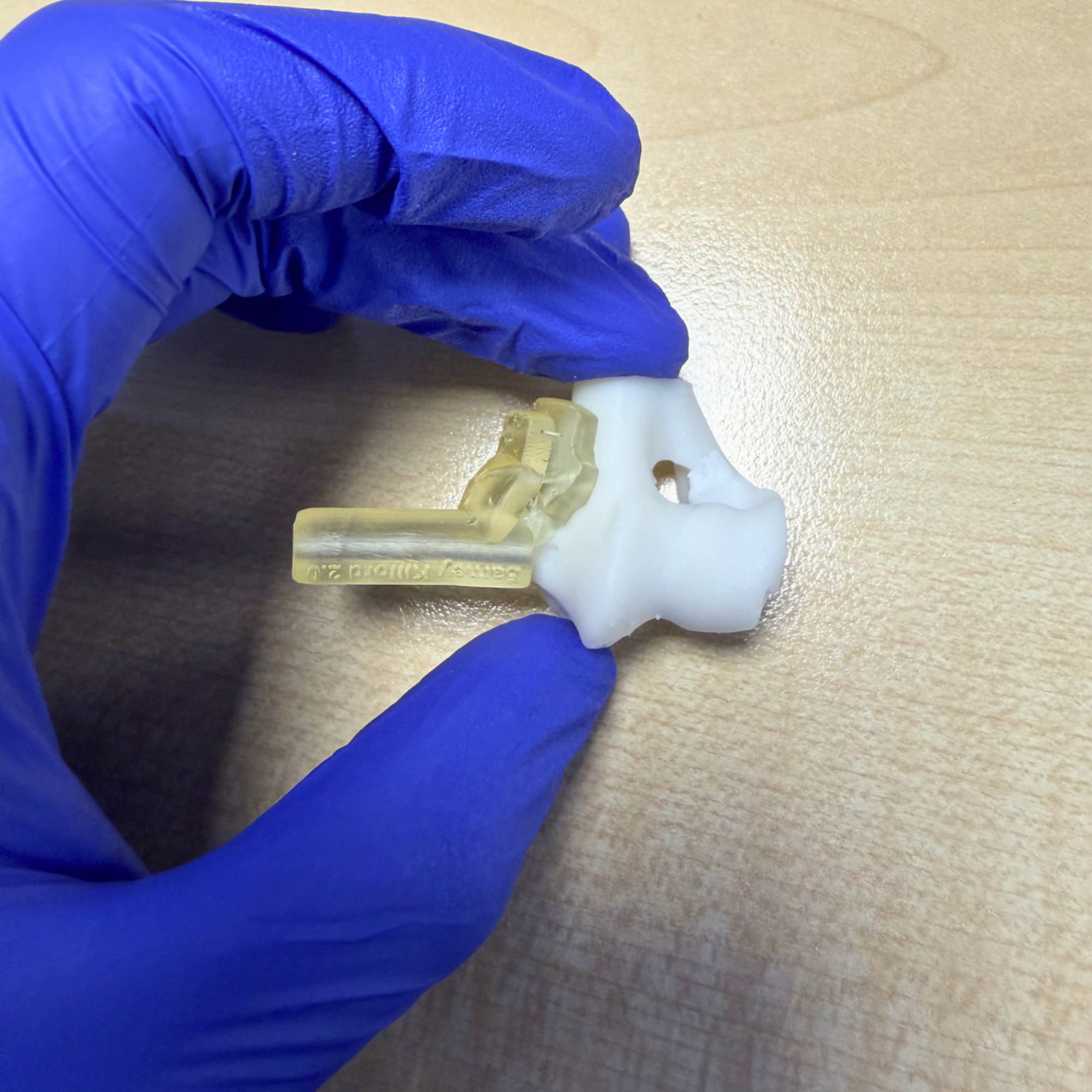
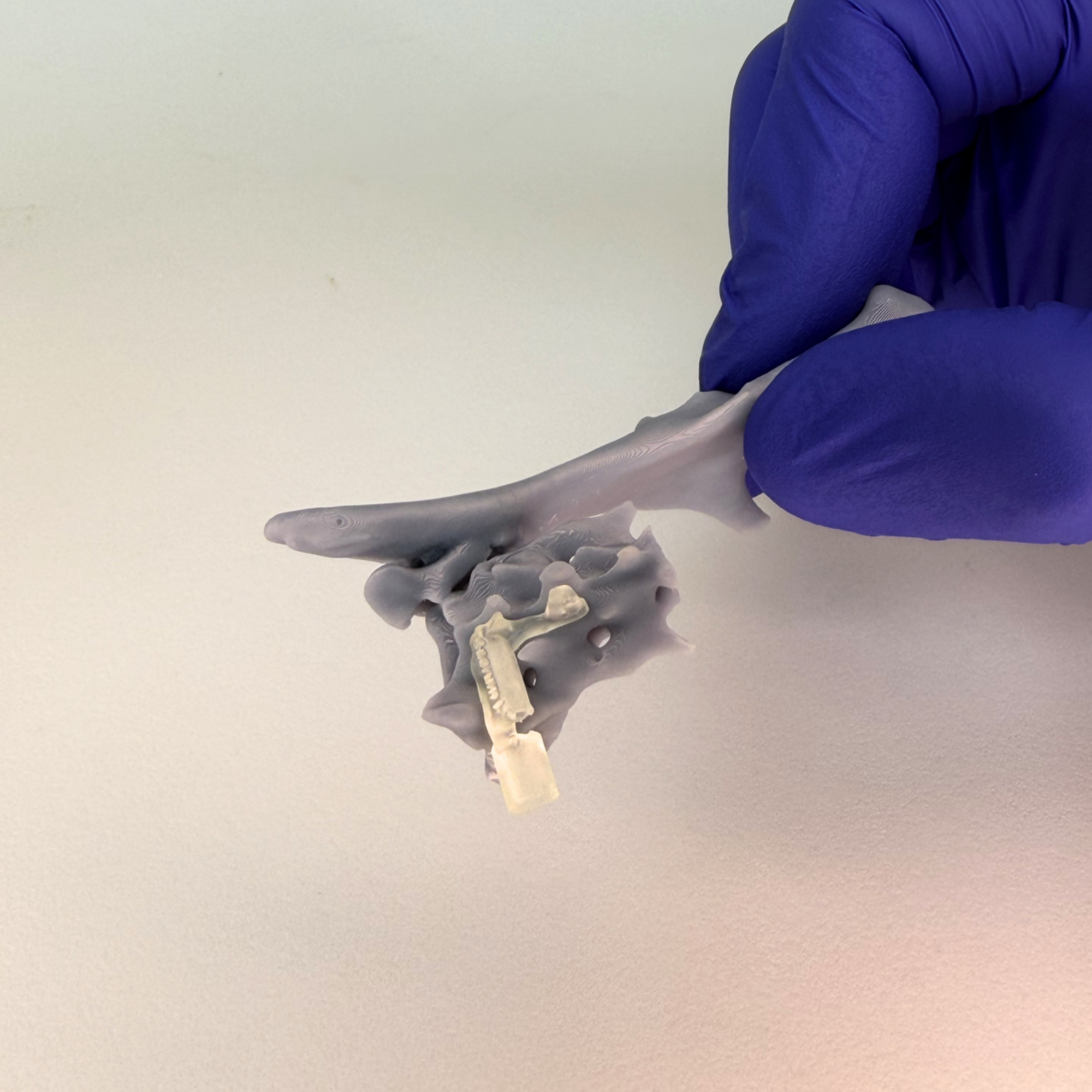
The accuracy of many orthopaedic and neurosurgical procedures depends on a single, precisely placed drill path. Where a screw or pin must pass through a narrow safe corridor (adjacent to a joint, a nerve, the spinal cord or a vascular structure) there is minimal tolerance for a freehand trajectory that deviates by even a few degrees. A drill guide dramatically reduces this uncertainty: the optimal path is planned in advance on a three-dimensional model of the patient's own anatomy, and the guide is designed to seat on the bone in a single position, reproducing that trajectory precisely in theatre. It remains important that the guide is correctly seated on the bone during surgery, as accurate placement depends on a stable, well-located fit. The benefits include improved accuracy, greater safety around critical structures, a reduced need for intra-operative imaging, and frequently reduced surgical and anaesthetic time. A printed bone model accompanies the guide, allowing the surgical approach to be rehearsed and the implants prepared in advance.
Use examples:
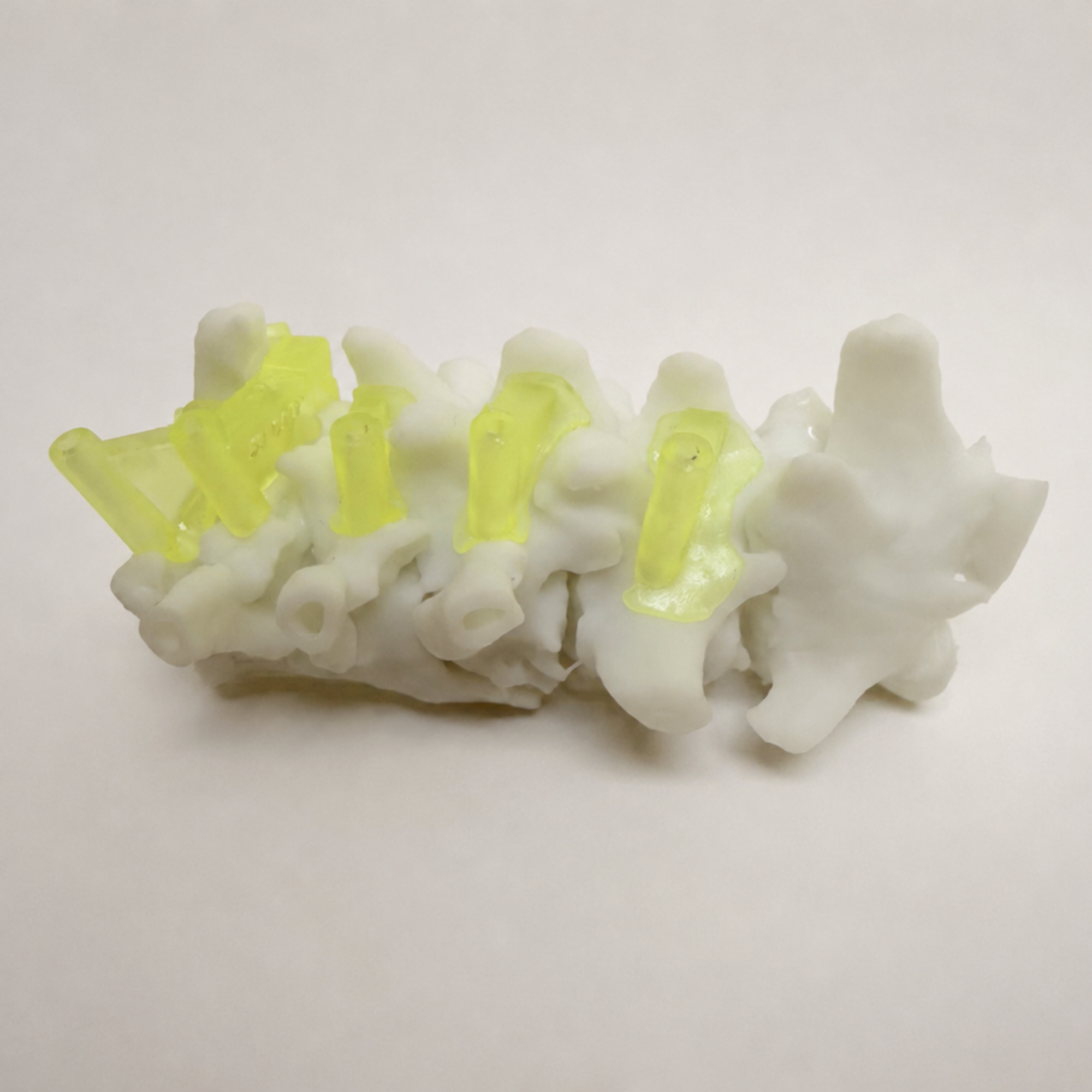
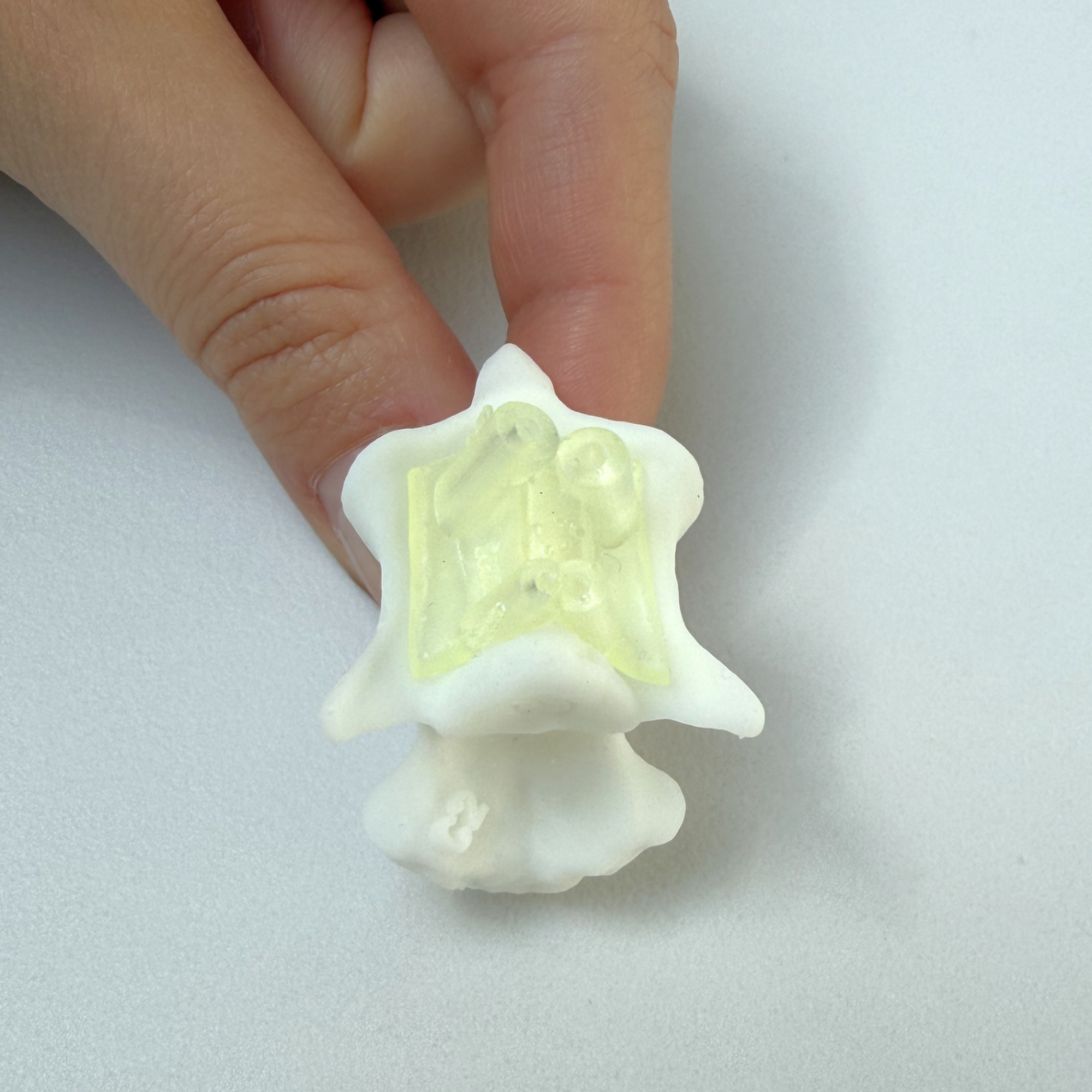
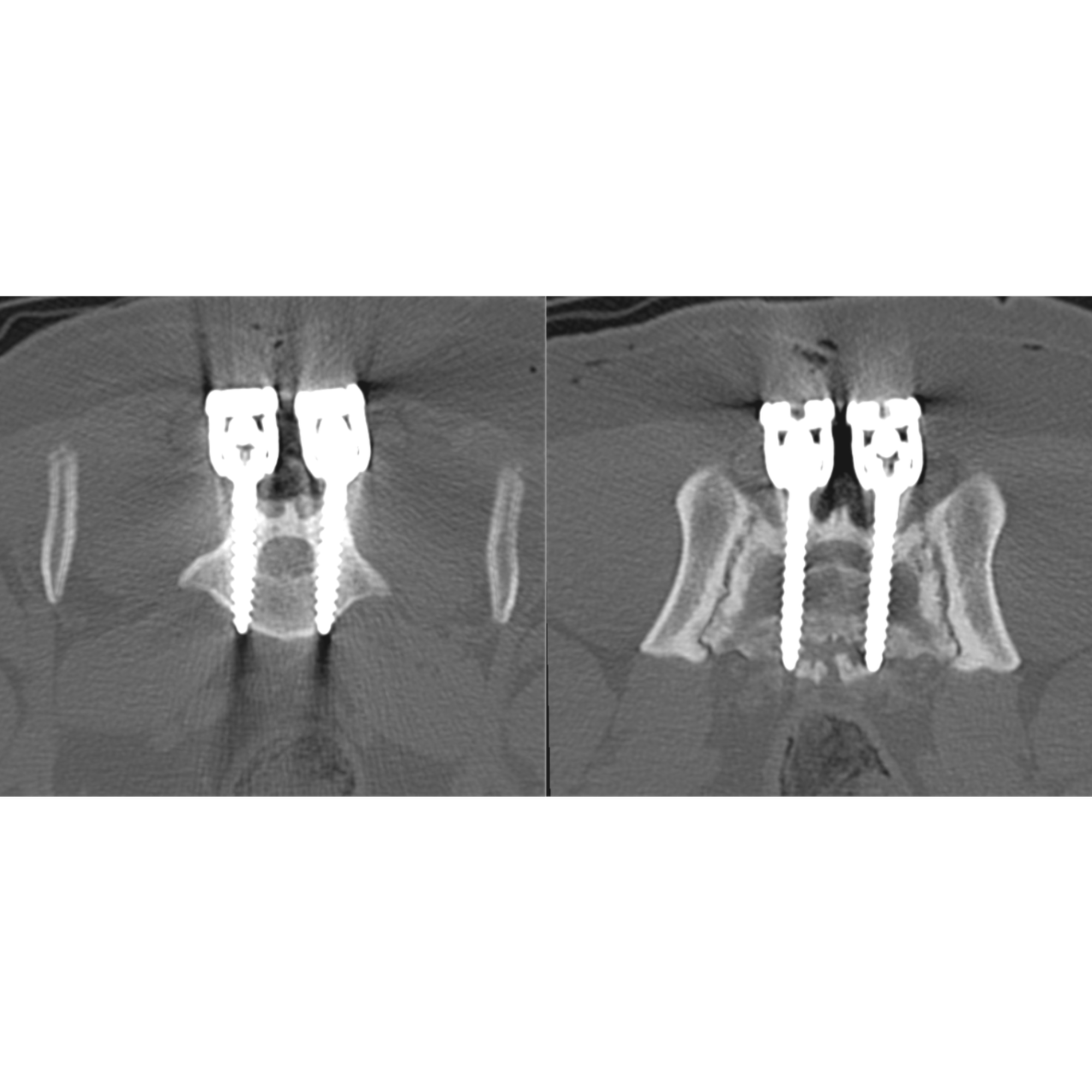
1 Vertebral Pedicle Screws
___
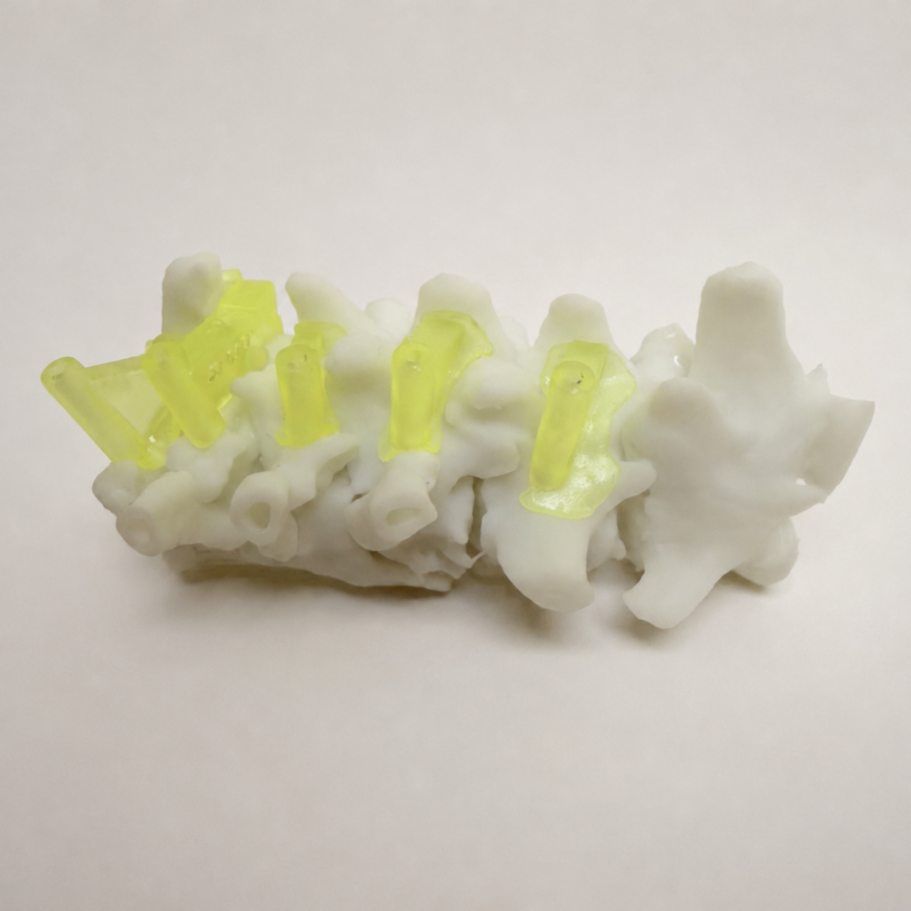
Implant placement in the vertebral column requires screws or pins to remain within the bony corridors of the pedicles and vertebral bodies, while avoiding the spinal canal and adjacent vessels. These corridors are narrow and vary considerably between patients, making freehand placement both technically demanding and unforgiving of error. The trajectories are planned on the 3D model and reproduced by guides that locate precisely on the vertebrae, ensuring each implant follows its intended path. The accompanying bone model allows the construct to be rehearsed and screw lengths confirmed before surgery.
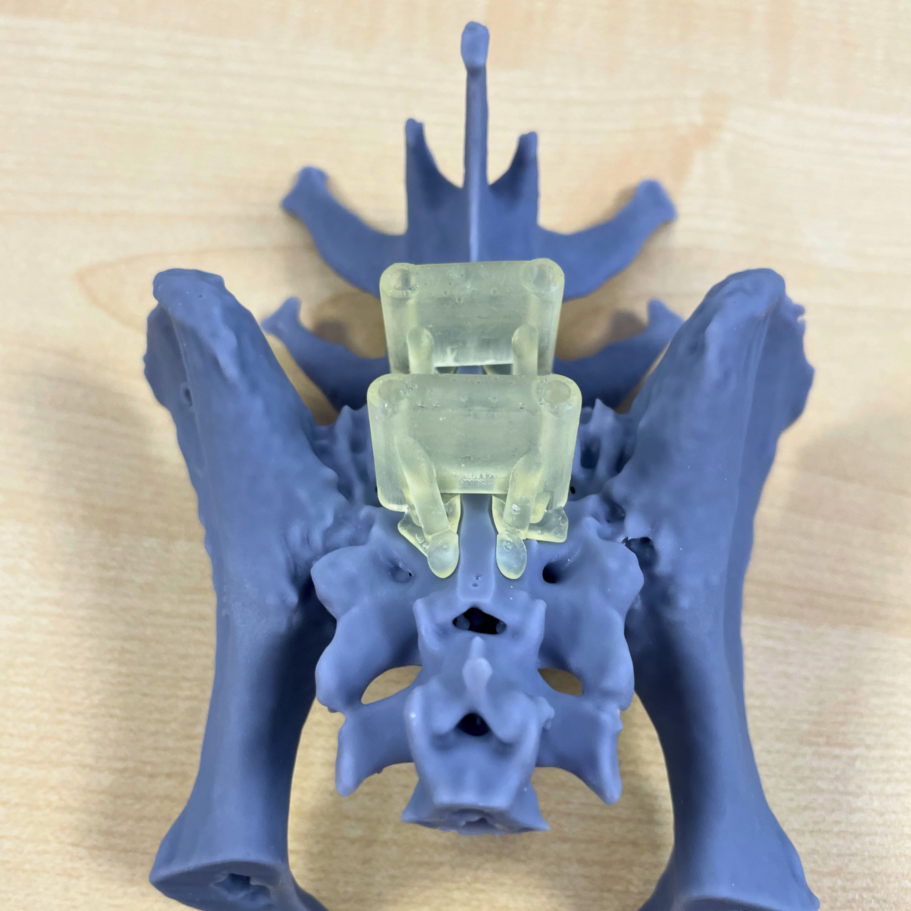
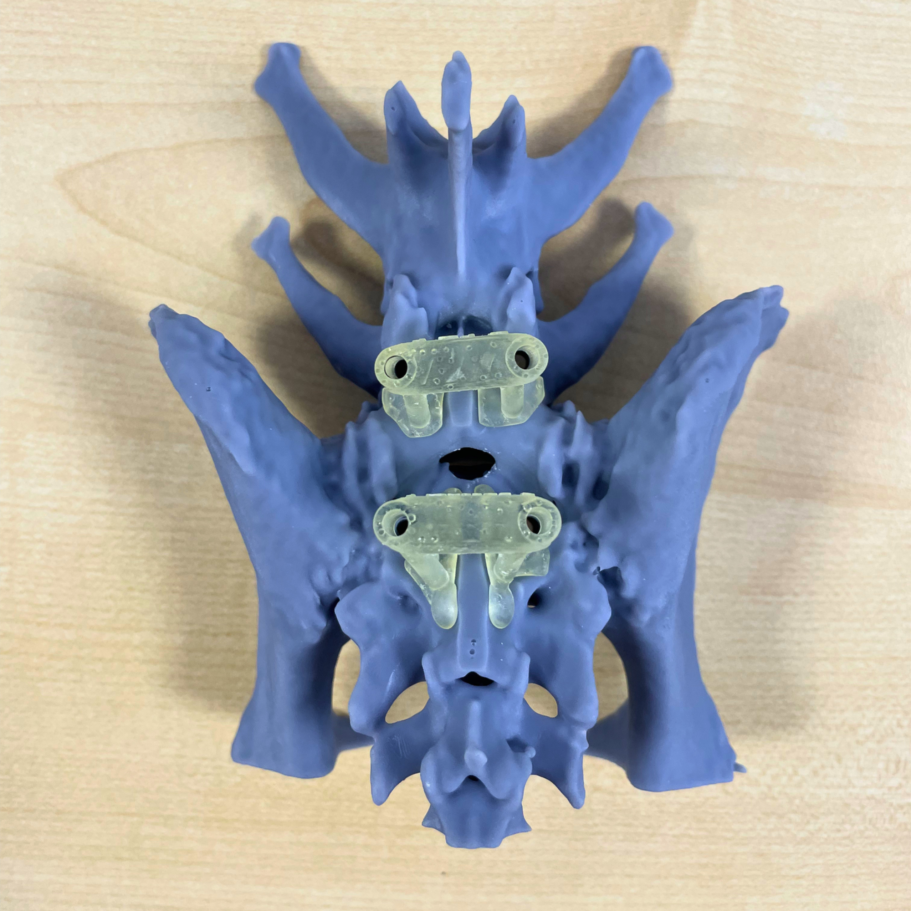
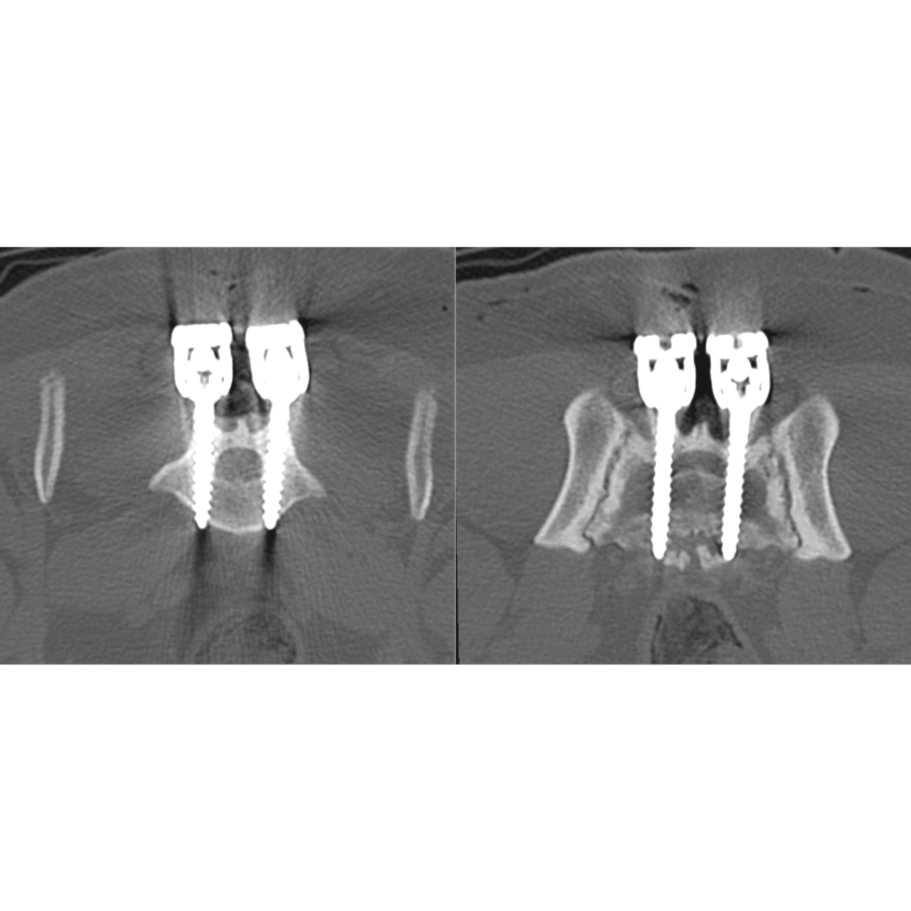
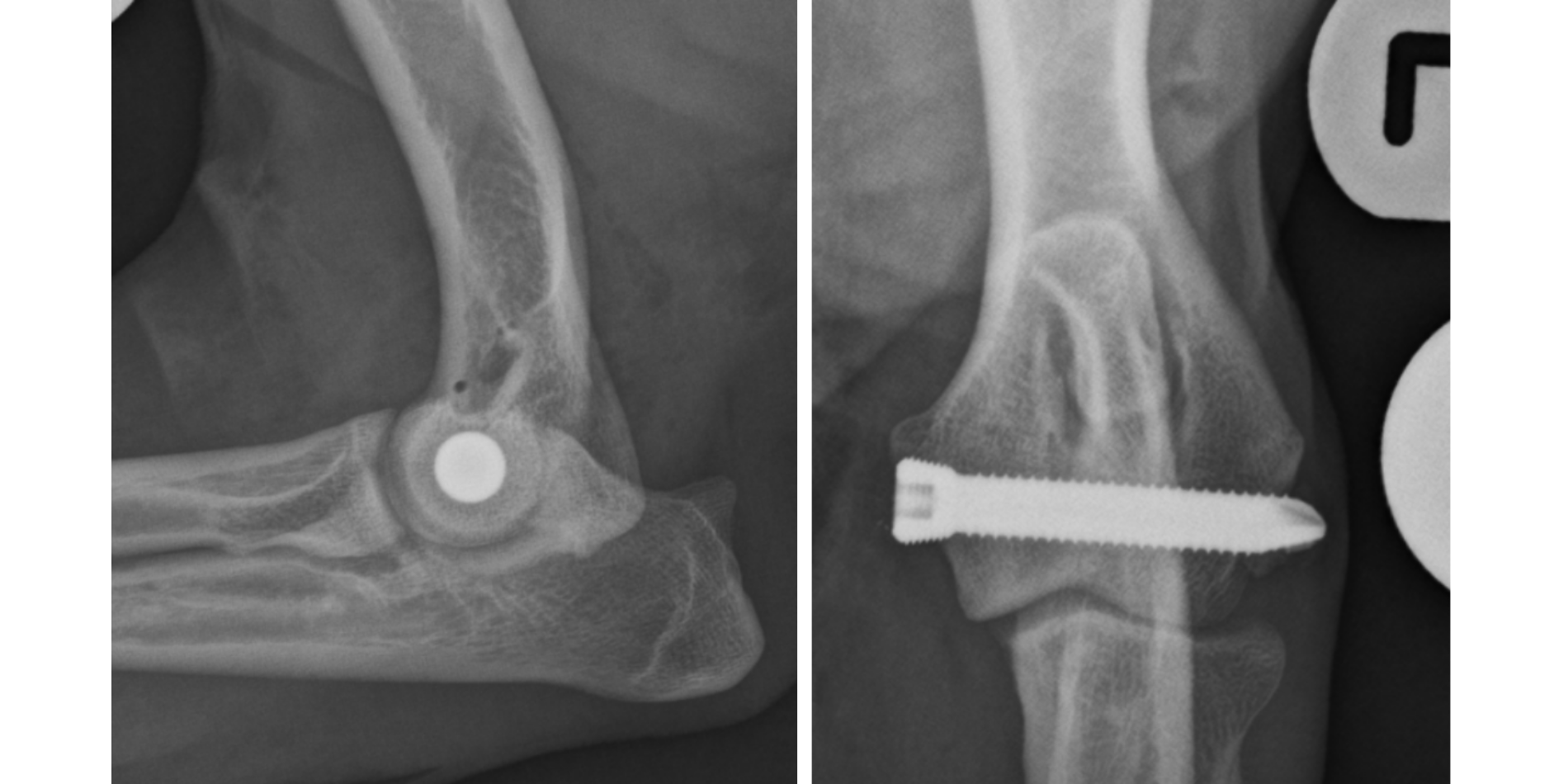
2 Humeral Intracondylar Fissure / Transcondylar Screw
___
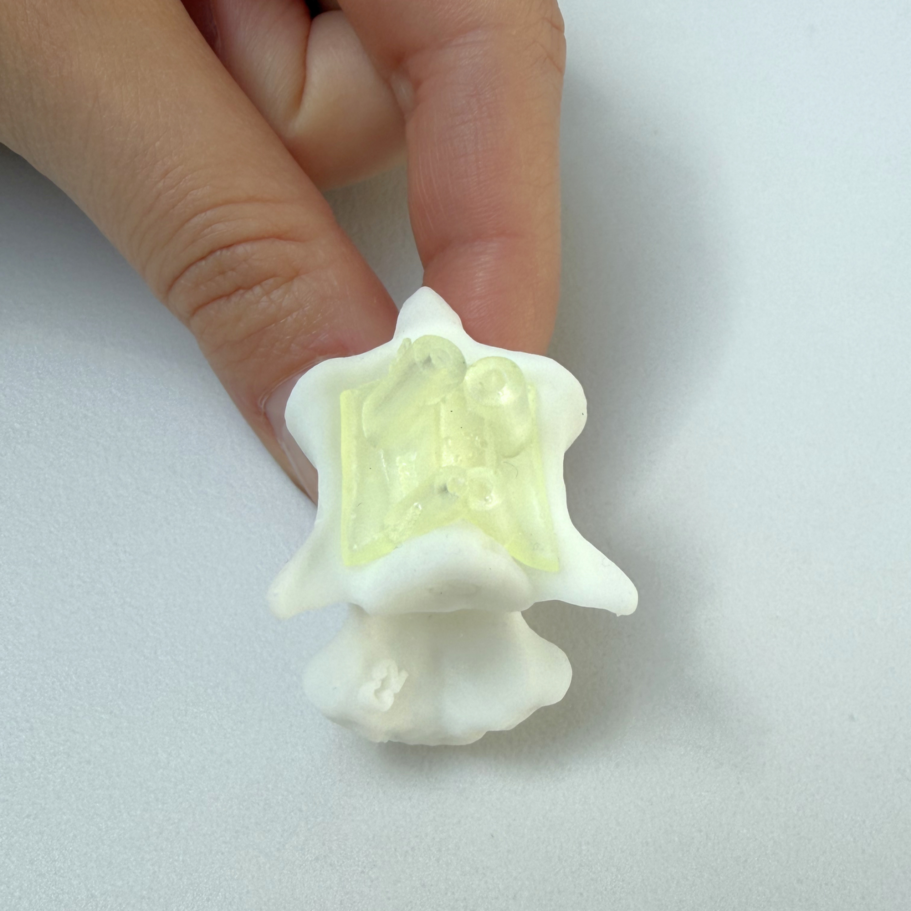
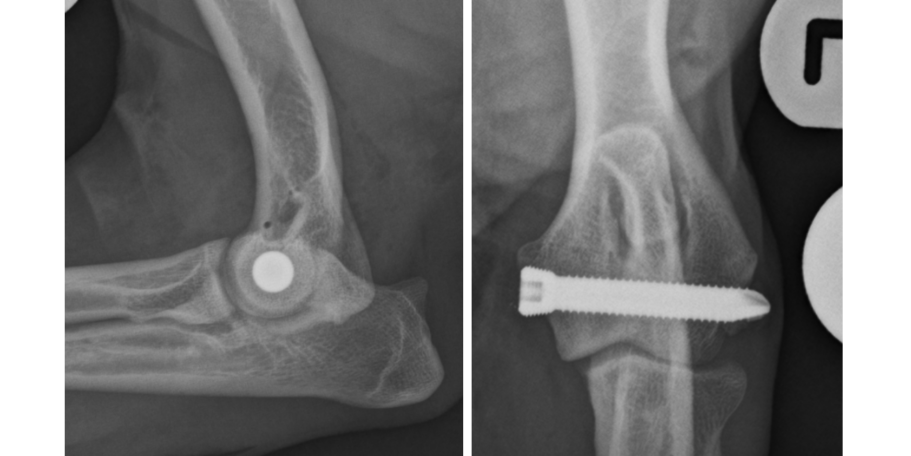
Placement of a transcondylar screw requires a single, accurate path across the humeral condyle; deviation in any direction risks inadequate purchase within the bone stock or breach of the joint. The optimal trajectory is defined in advance on the patient's anatomy, and the drill guide reproduces it precisely, enabling reliable screw placement through a narrow target. A printed bone model supports rehearsal and confirmation of screw size prior to surgery.
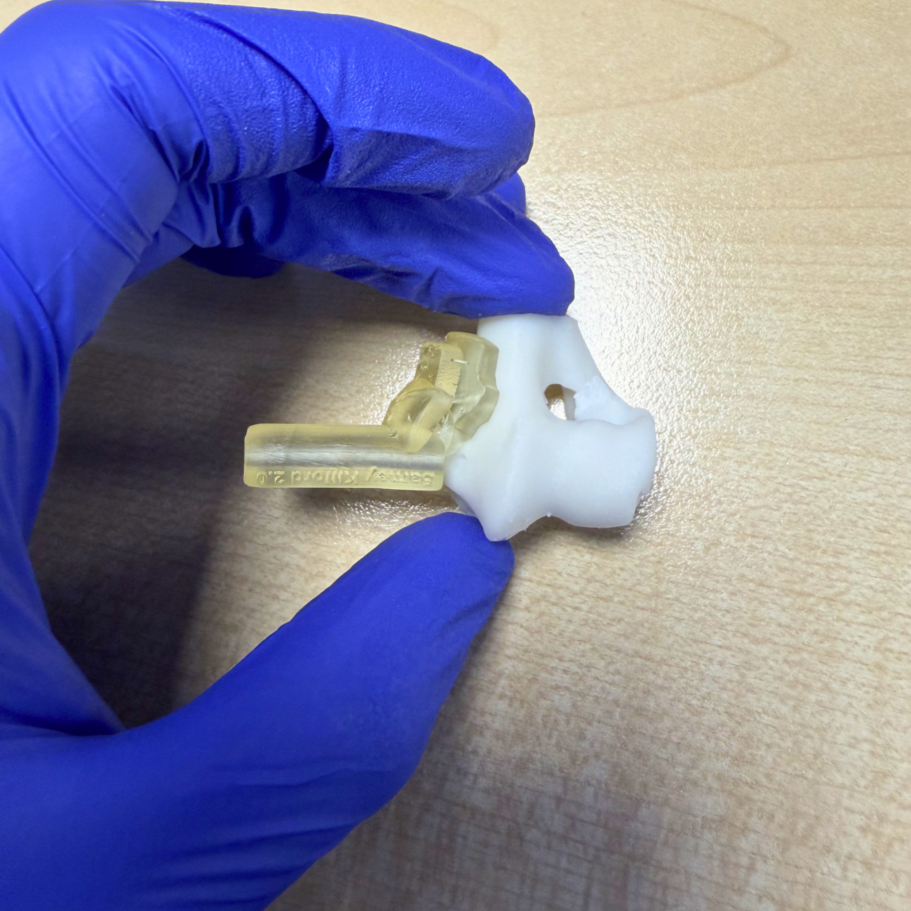
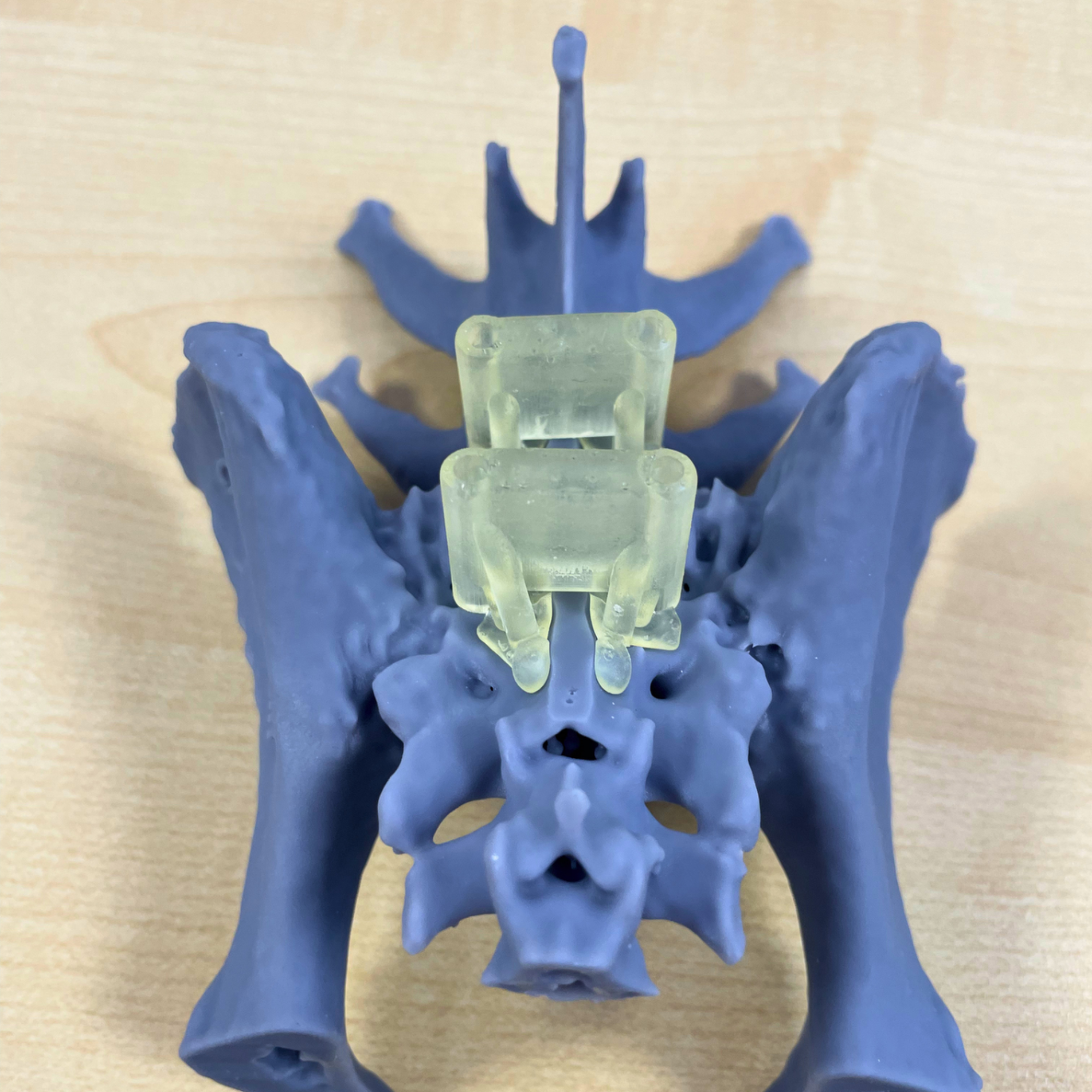
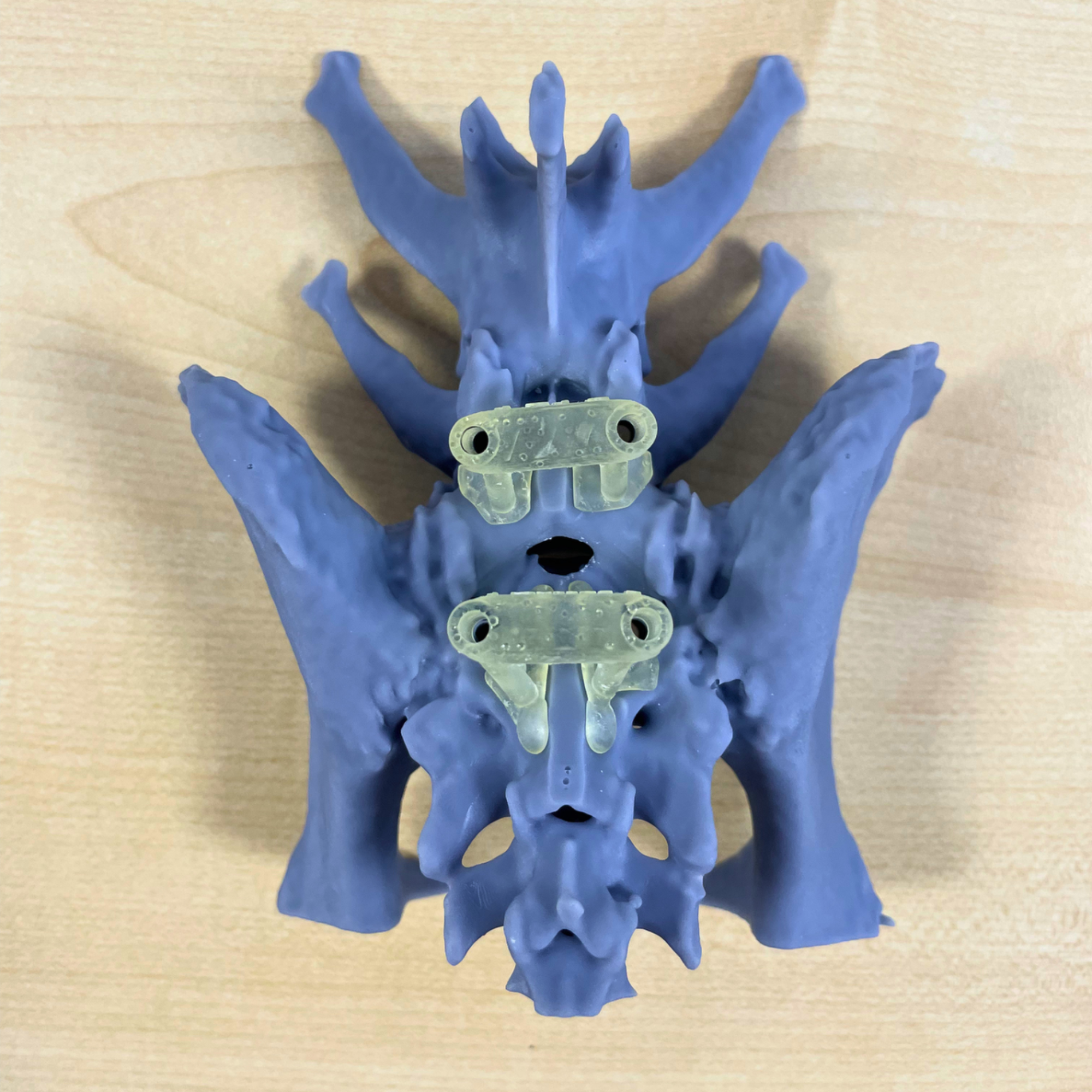
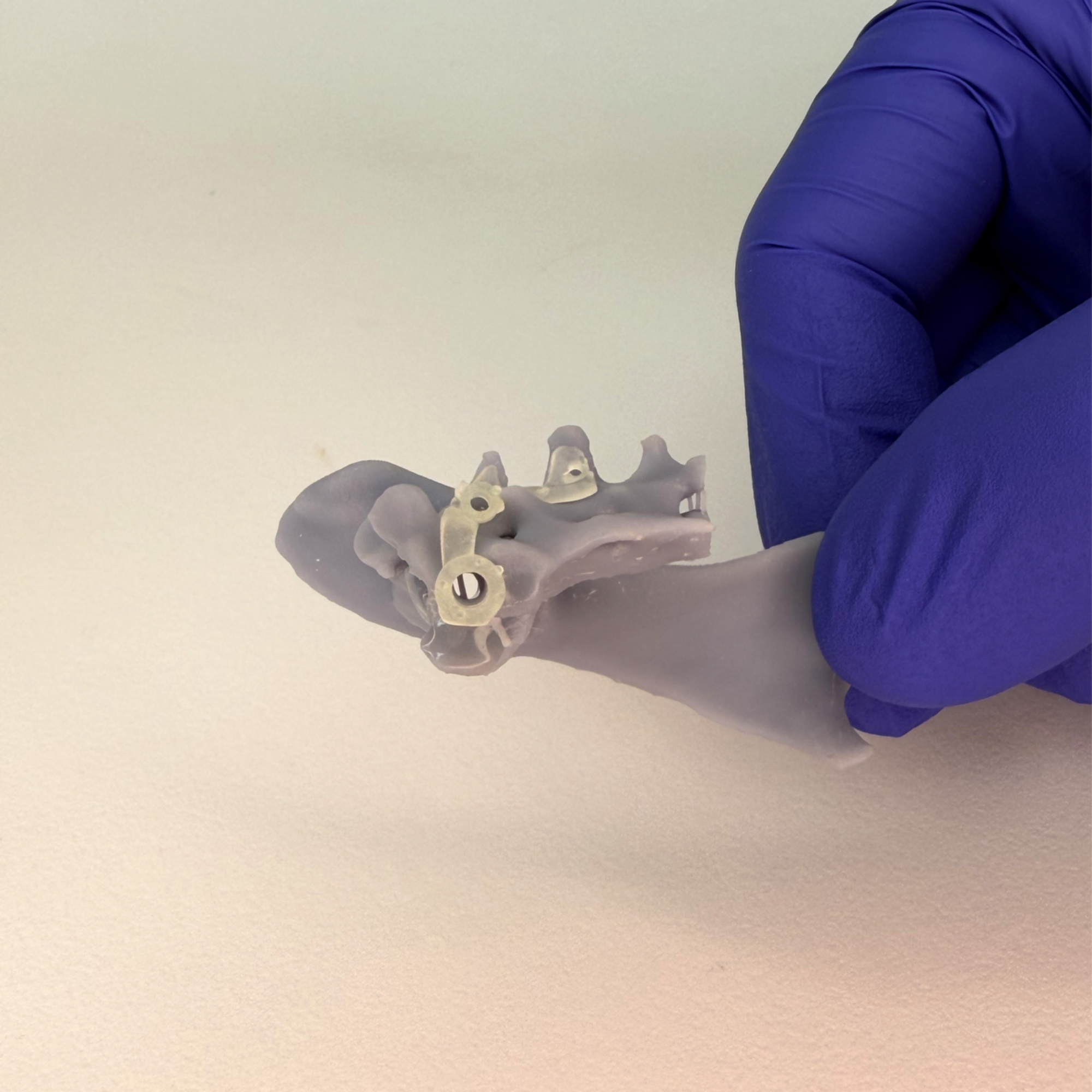
3 Sacroiliac Fracture / Luxation
___
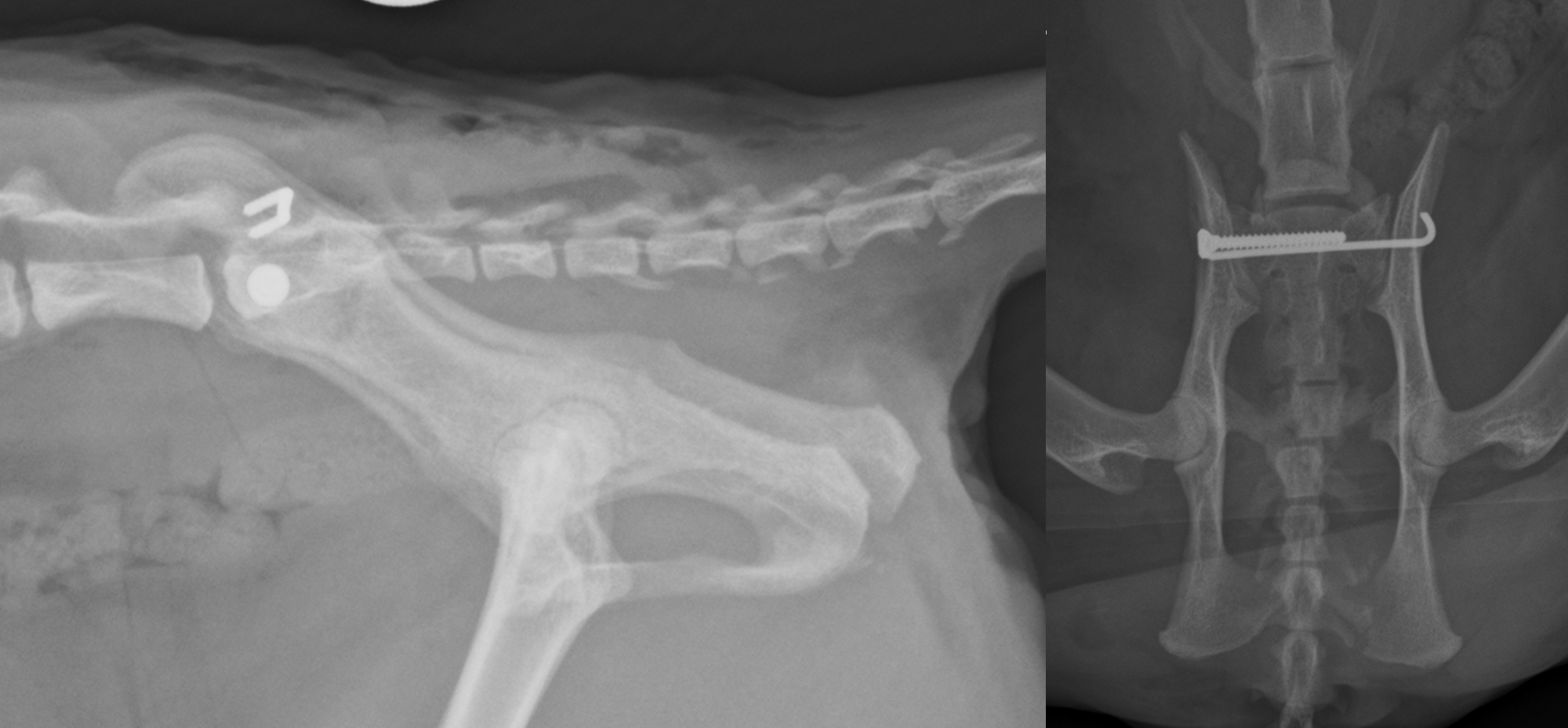
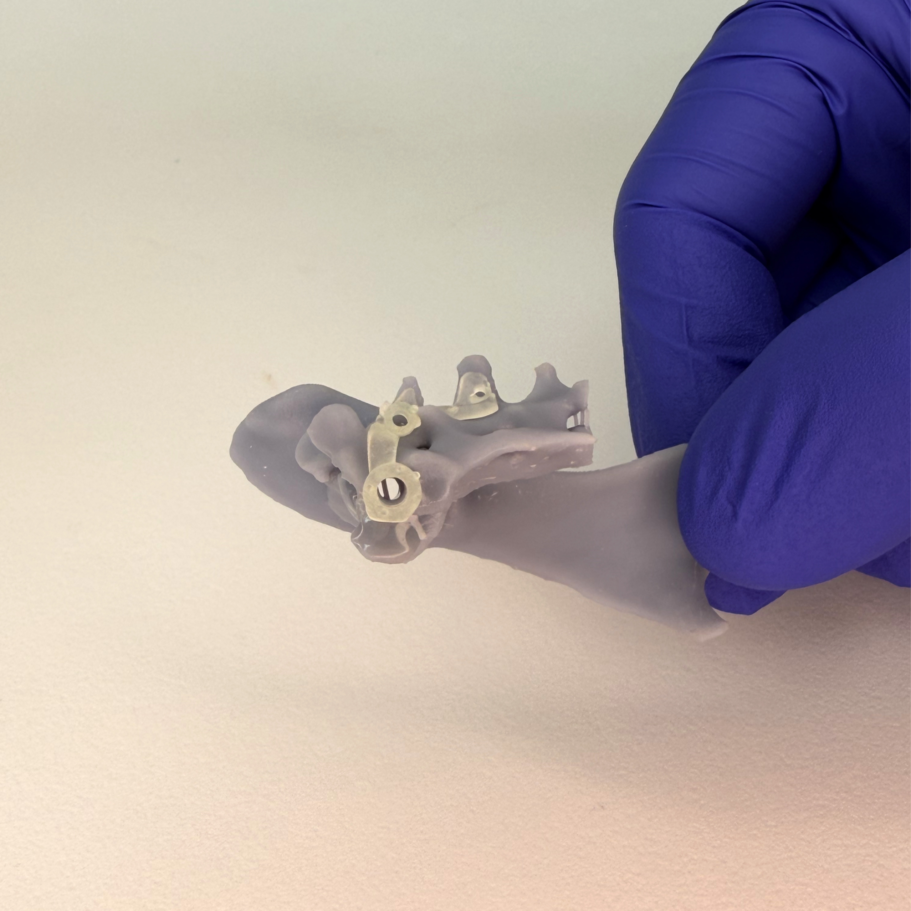
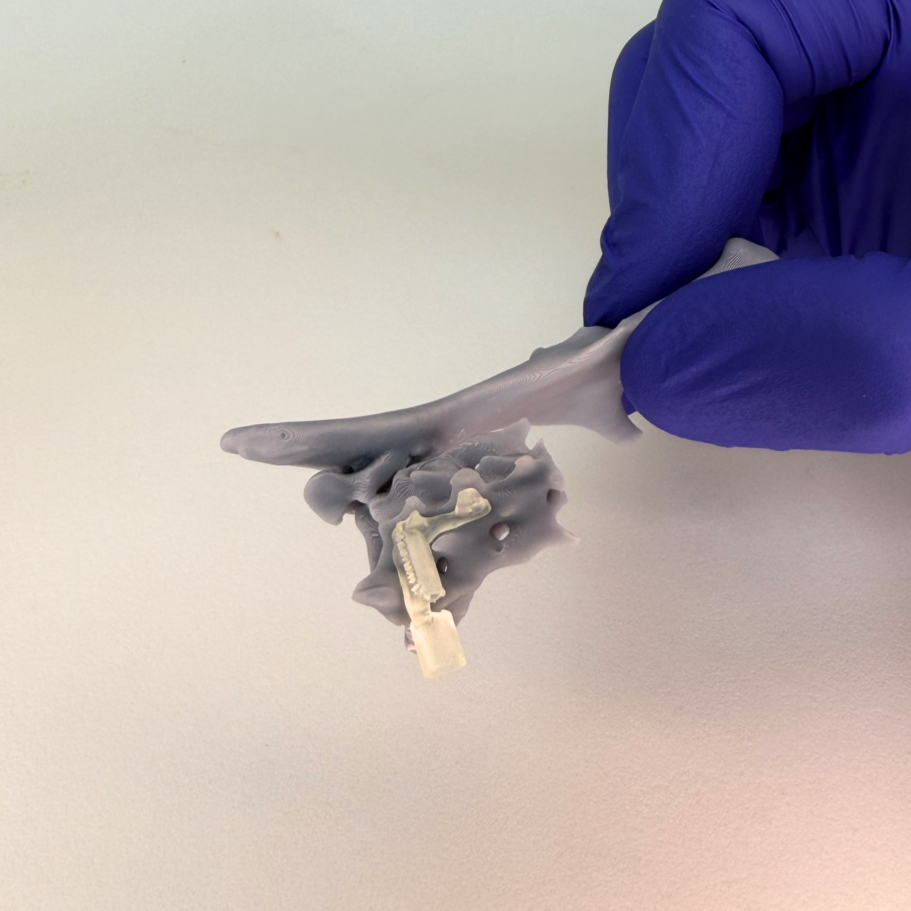
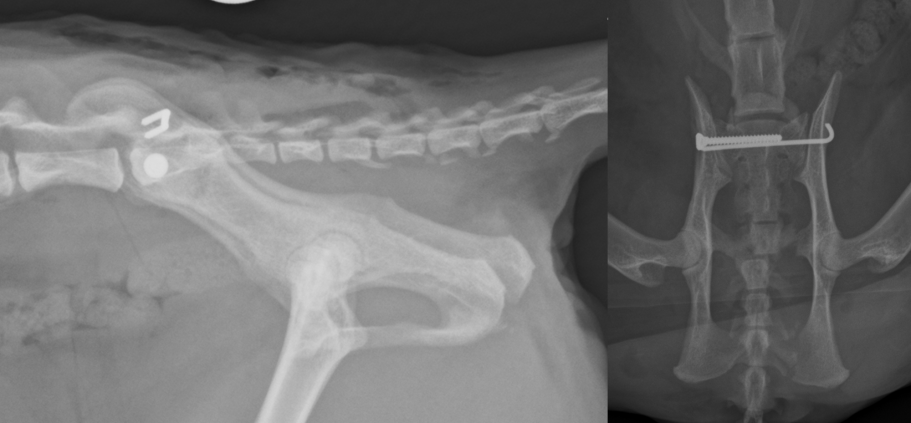
Secure fixation depends on a screw that engages the body of the sacrum along a safe corridor: insufficient depth compromises purchase, while excessive depth or an incorrect angle risks injury to neurovascular structures or breach of the canal. The corridor is planned in advance and reproduced by a guide that seats reliably on the bone, improving both the safety and the holding strength of the repair. The accompanying bone model allows the trajectory and screw length to be confirmed beforehand.
4 Other applications
___
Beyond these examples, drill guides offer value in any procedure where a planned, reproducible trajectory is preferable to a freehand one — restoring accuracy and predictability to cases that would otherwise rely heavily on intra-operative judgement.