
Osteotomy guides
_____
An osteotomy is a controlled surgical cut through bone, used to realign, reposition or remove a segment. Performed freehand, its accuracy depends on intra-operative judgement of the cut's angle, level and depth, often with limited landmarks available. A cutting guide addresses this directly: the osteotomy is planned in advance on a three-dimensional model of the patient's own anatomy, and the guide is designed to seat on the bone in a single position, reproducing the planned cut precisely in theatre.
The benefits are threefold: a more accurate correction, greater consistency between cases, and, in many instances, reduced surgical and anaesthetic time. Where the osteotomy creates segments that require repositioning, a reduction guide can maintain the planned alignment while fixation is applied. A printed bone model accompanies the guides, allowing the procedure to be rehearsed and any implants pre-contoured in advance, so they are ready for immediate use during surgery.
Use examples:
1 Deformity correction
___
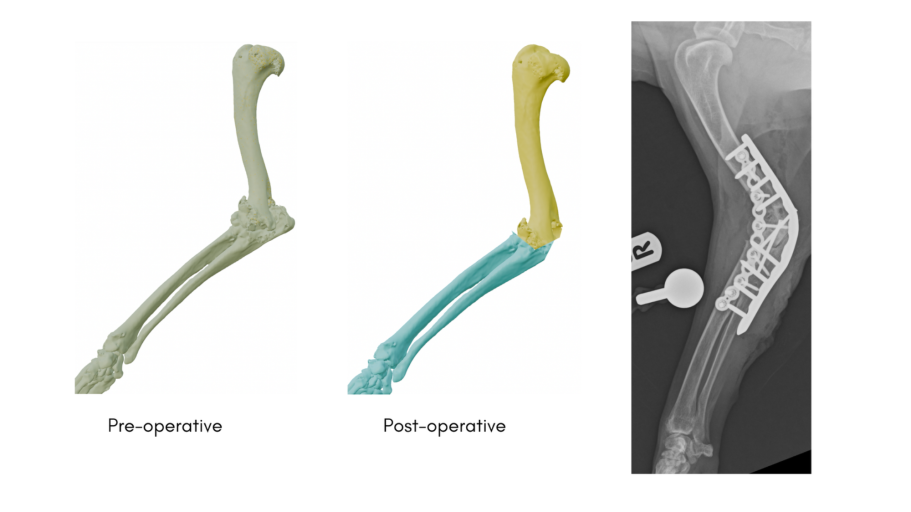
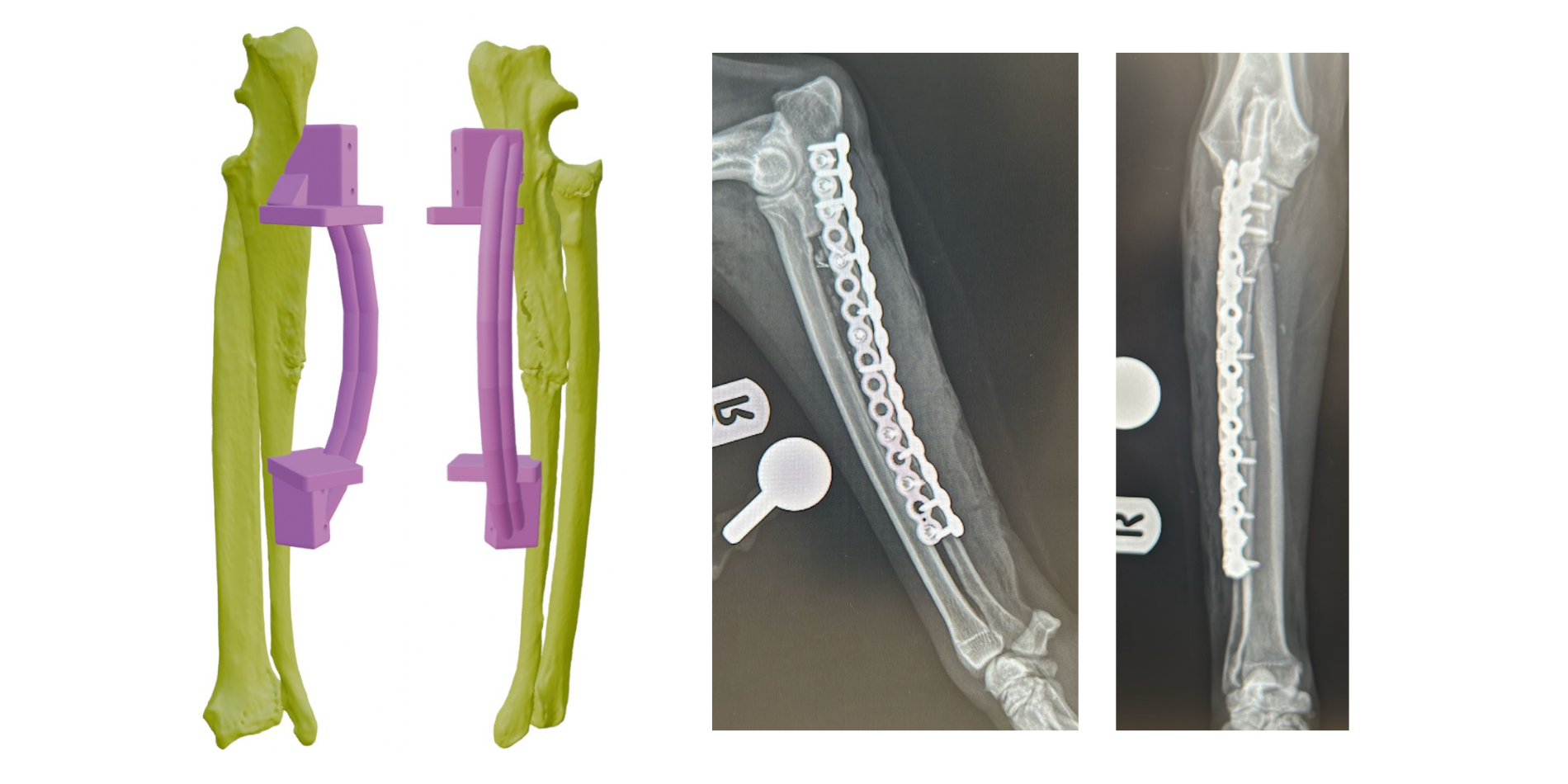
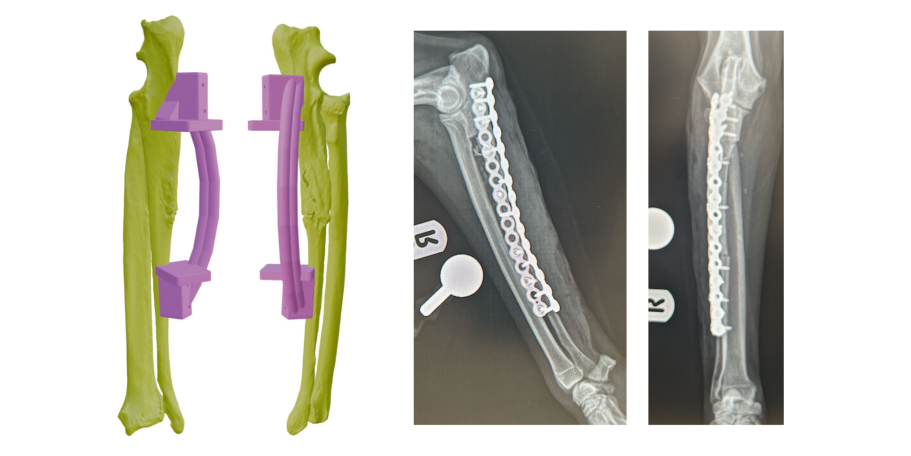
Angular and rotational limb deformities require the bone to be cut and realigned in three dimensions — something that is hard to judge accurately by eye during surgery. The osteotomy is planned on the 3D model so the correction angle and level are defined beforehand. A cutting guide then reproduces that exact cut, and a reduction guide can lock the corrected segments into the planned position while fixation is applied. Pre-contouring the implant on the printed bone model means it is ready to fit at the first attempt.
2 Oncologic surgery
___
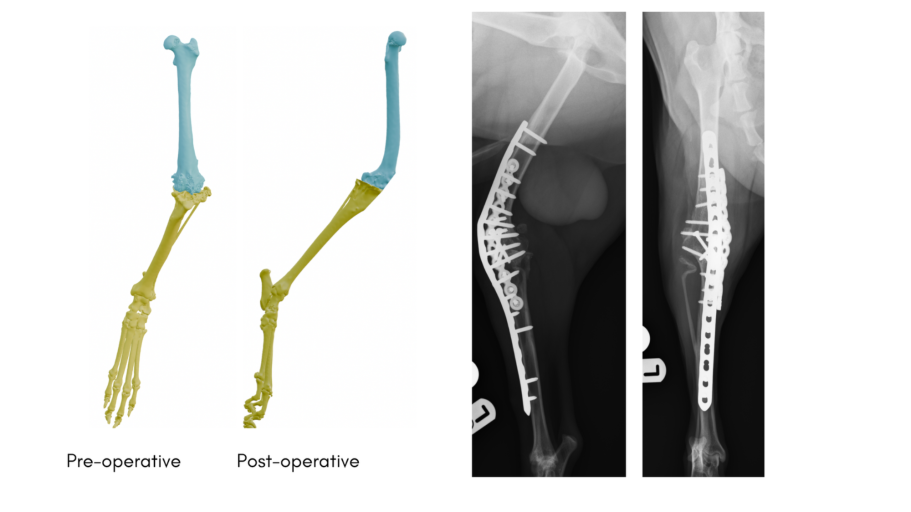
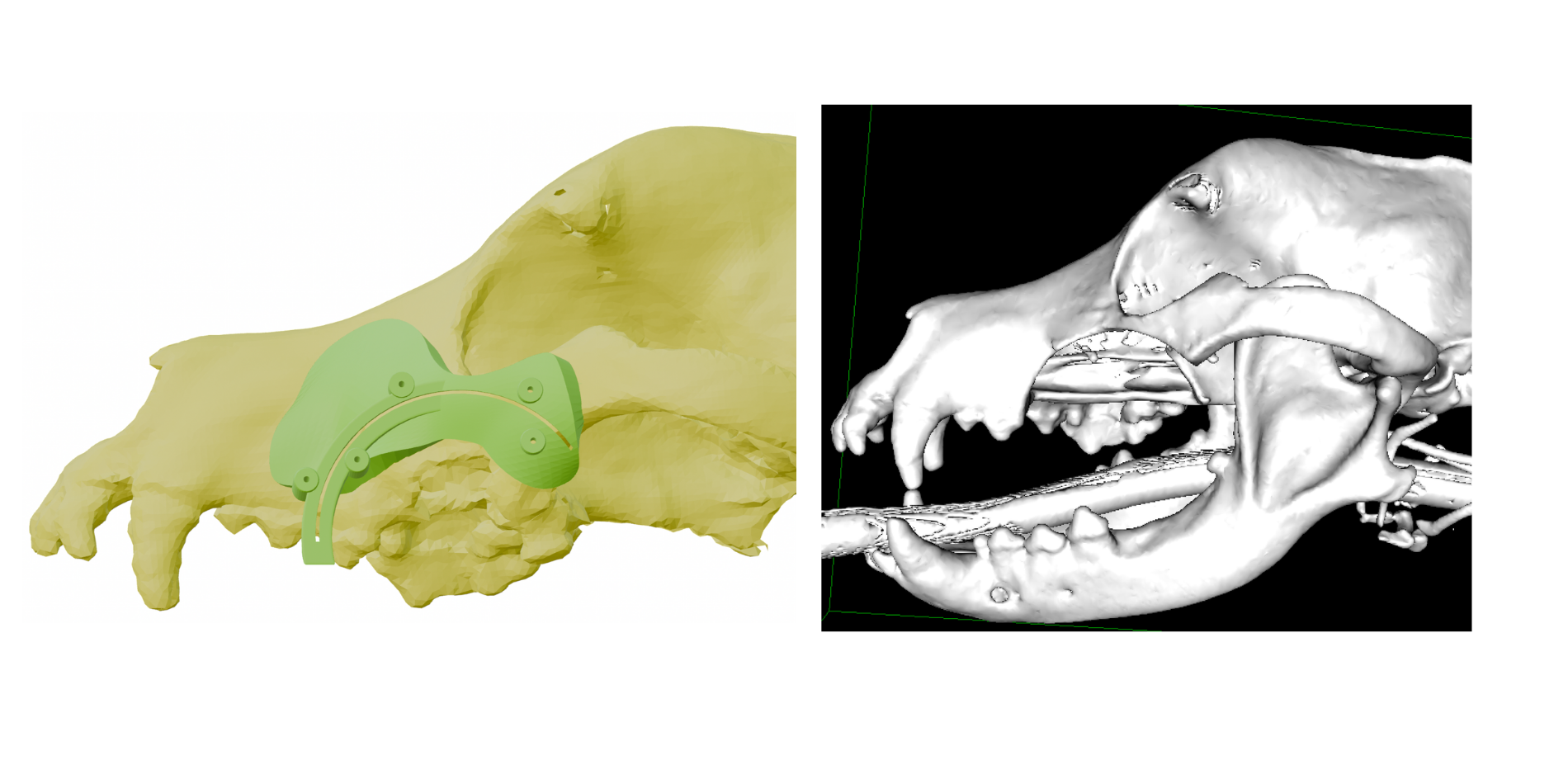
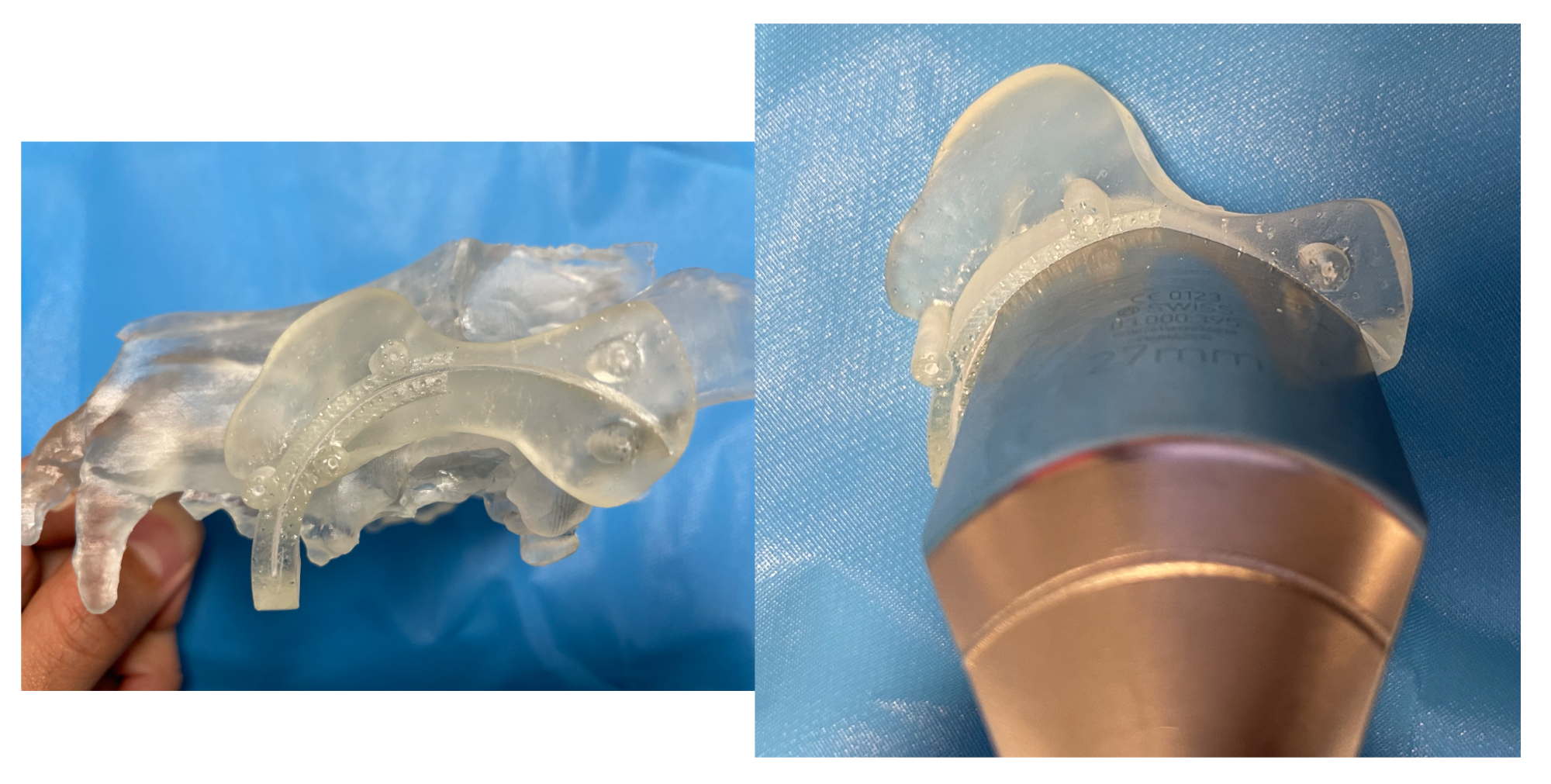
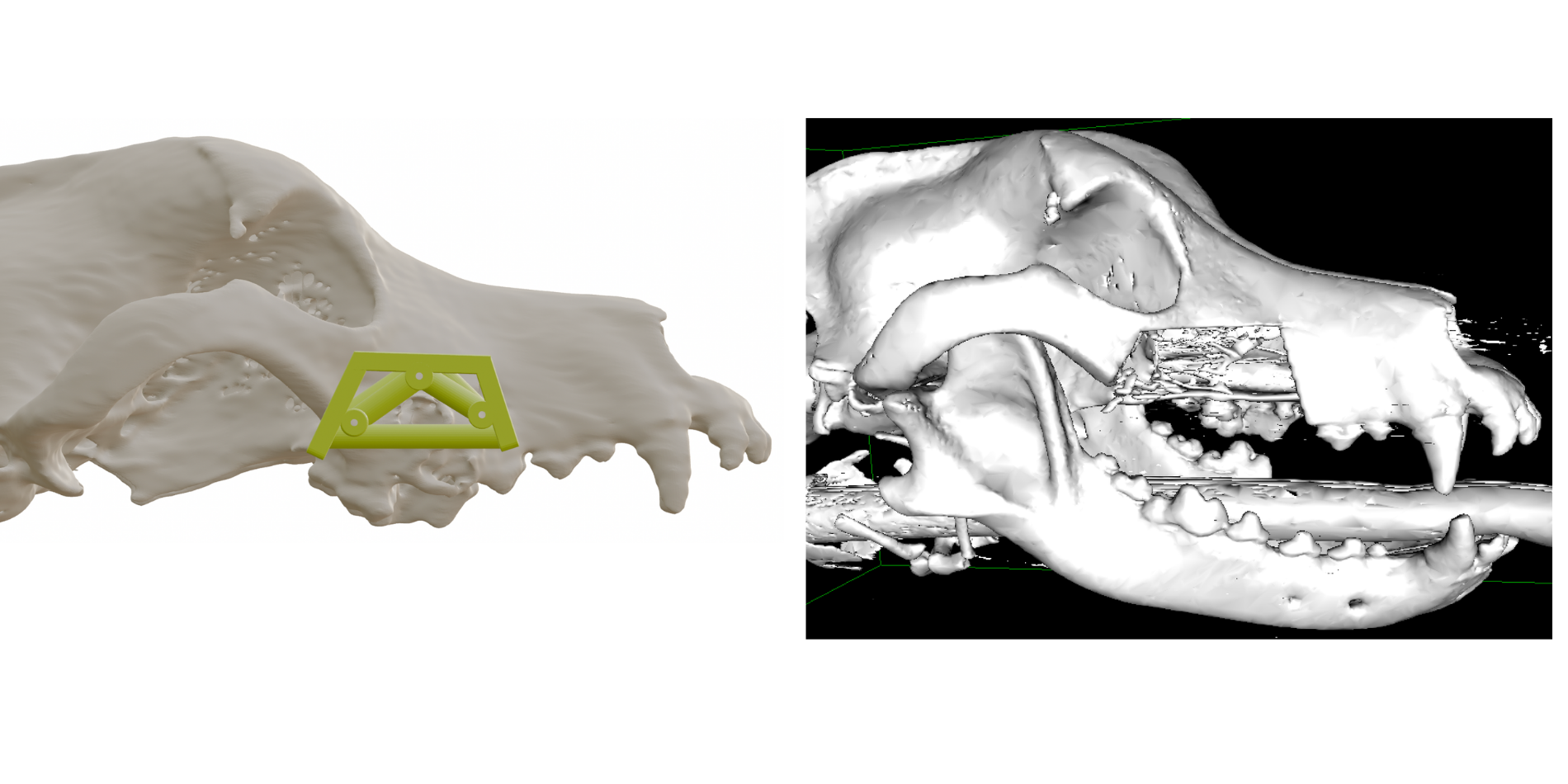
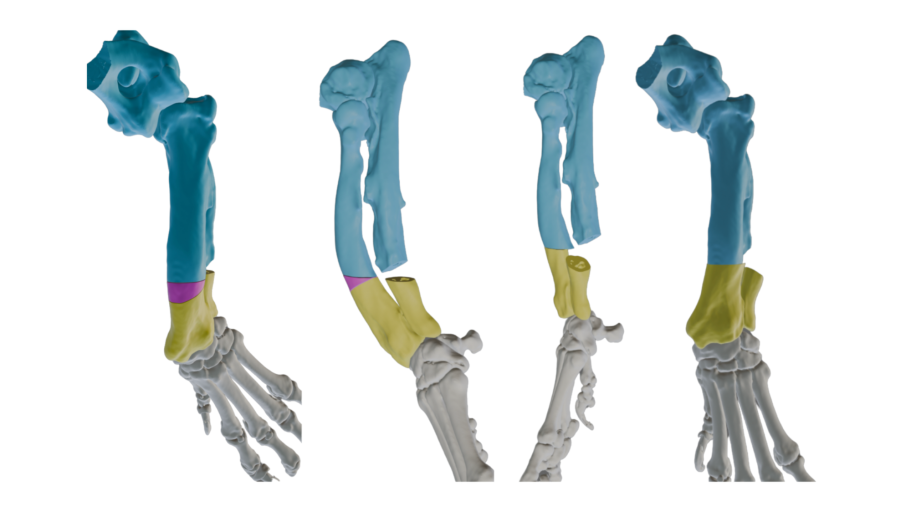
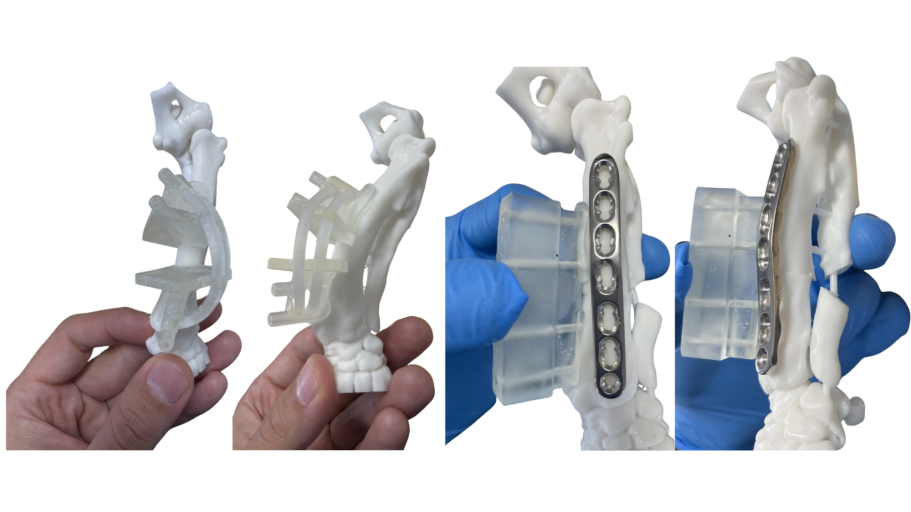
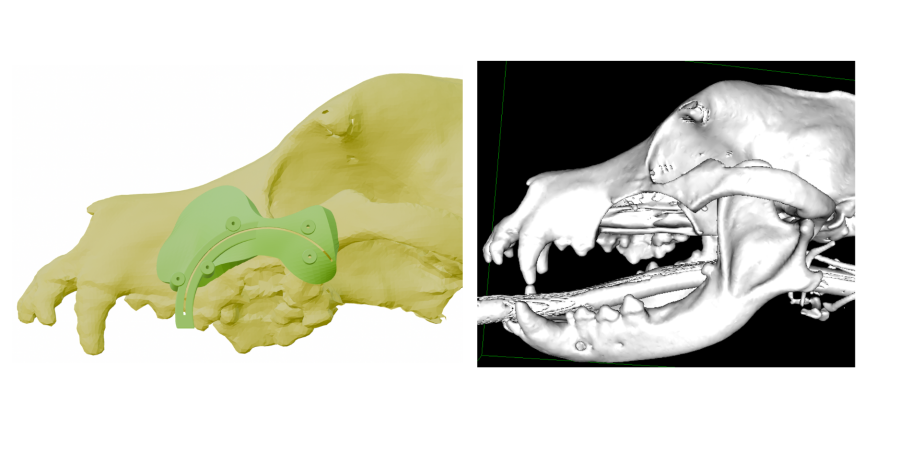
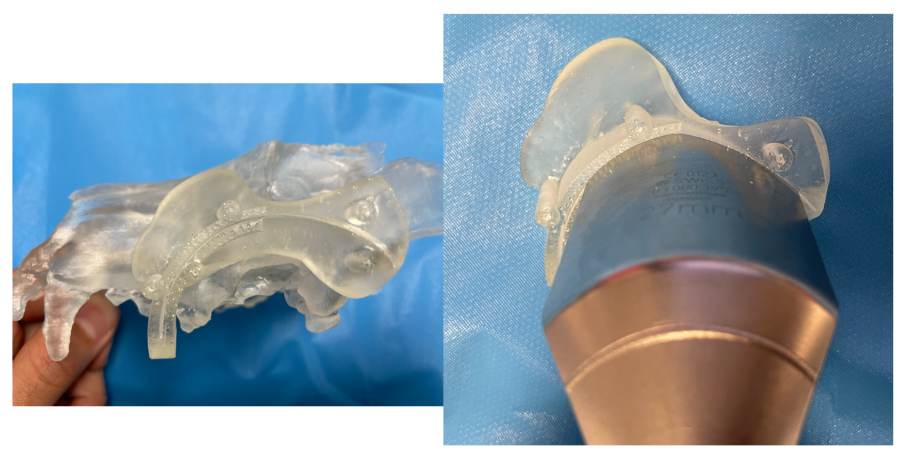
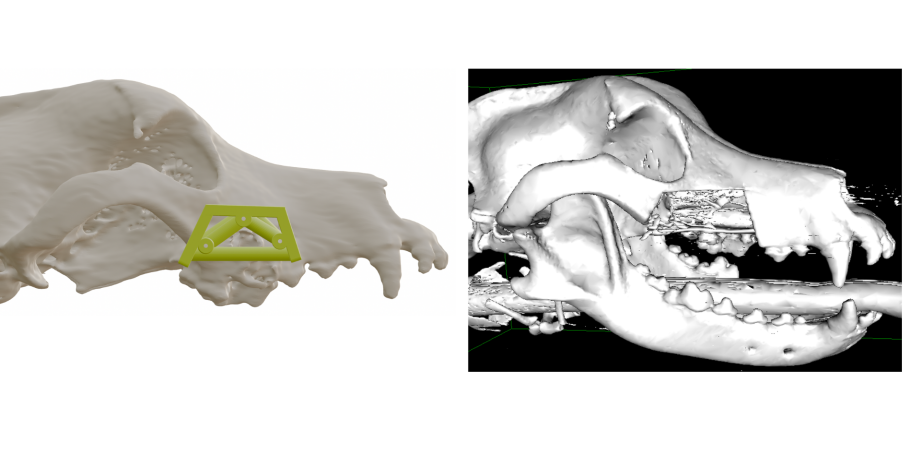
In tumour removal — such as maxillectomy, mandibulectomy or limb-sparing procedures — the priority is a complete excision with predictable, well-defined margins. Planning the resection in advance allows the bone cuts to be designed around the intended margin, and the cutting guide reproduces those exact planes in theatre, taking much of the uncertainty out of where to cut. In limb-sparing surgery, reduction guides and the printed bone model further help align and reconstruct the remaining bone accurately, supporting a more reliable repair.
3 Arthrodesis
___
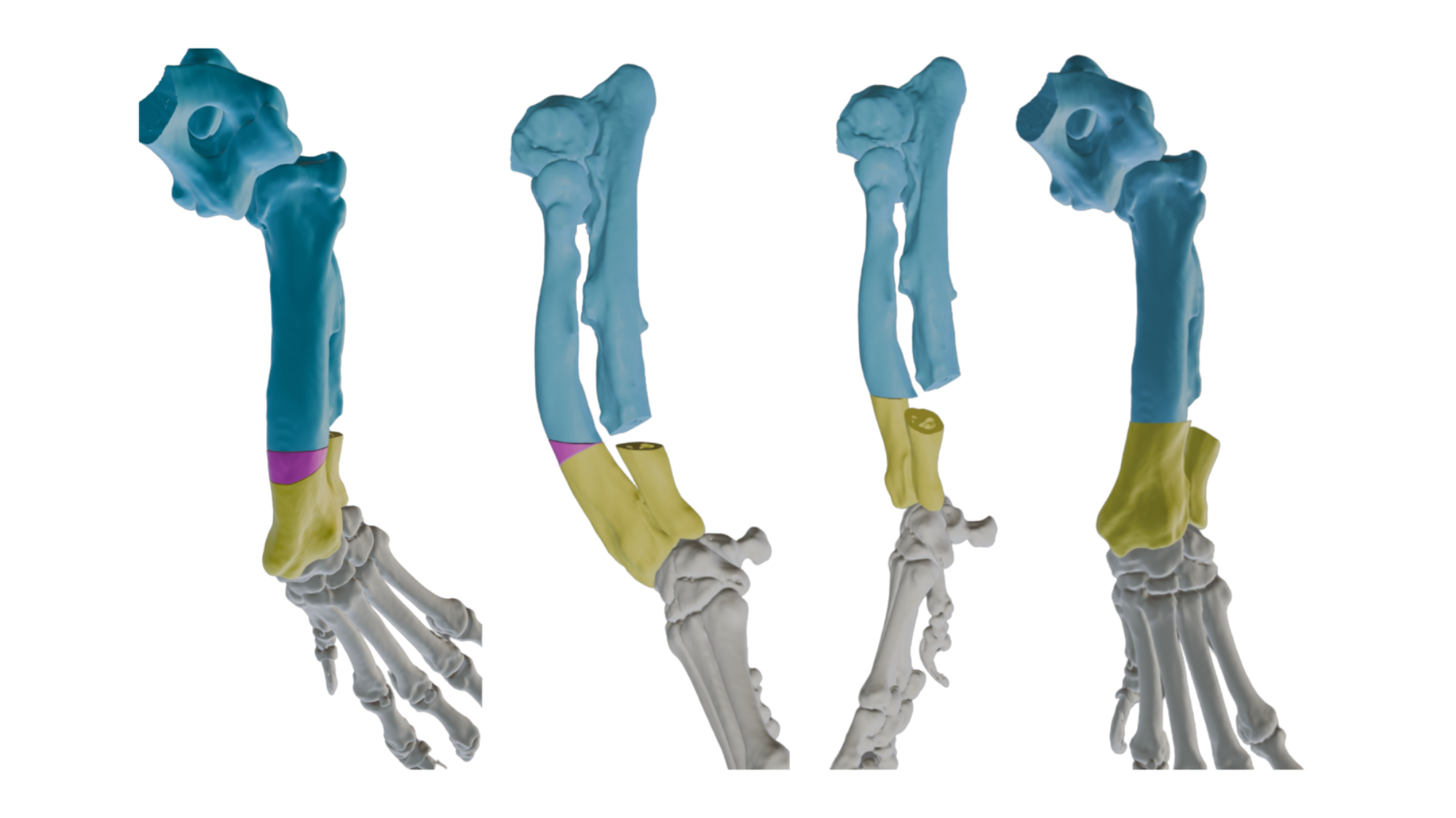
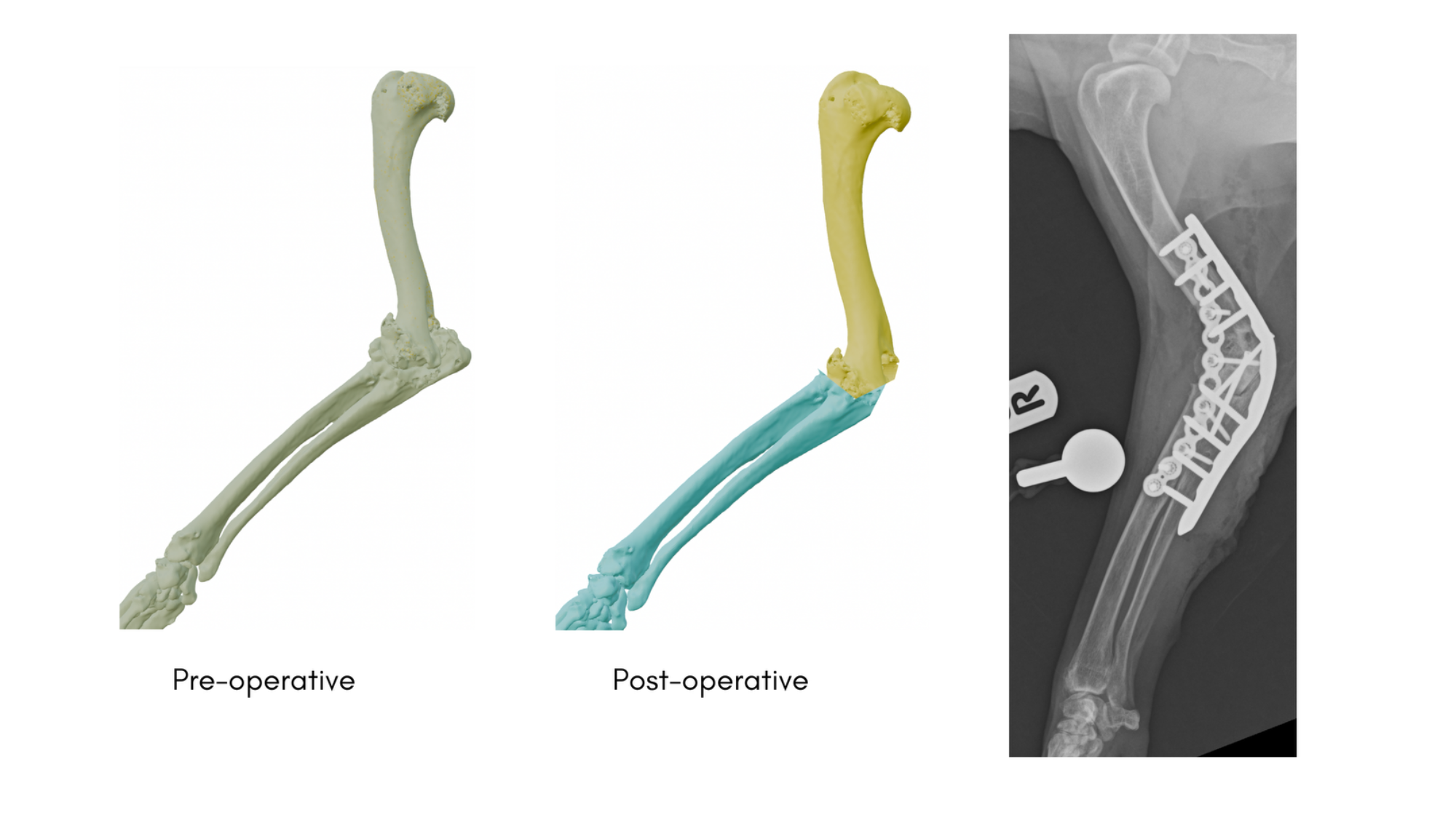
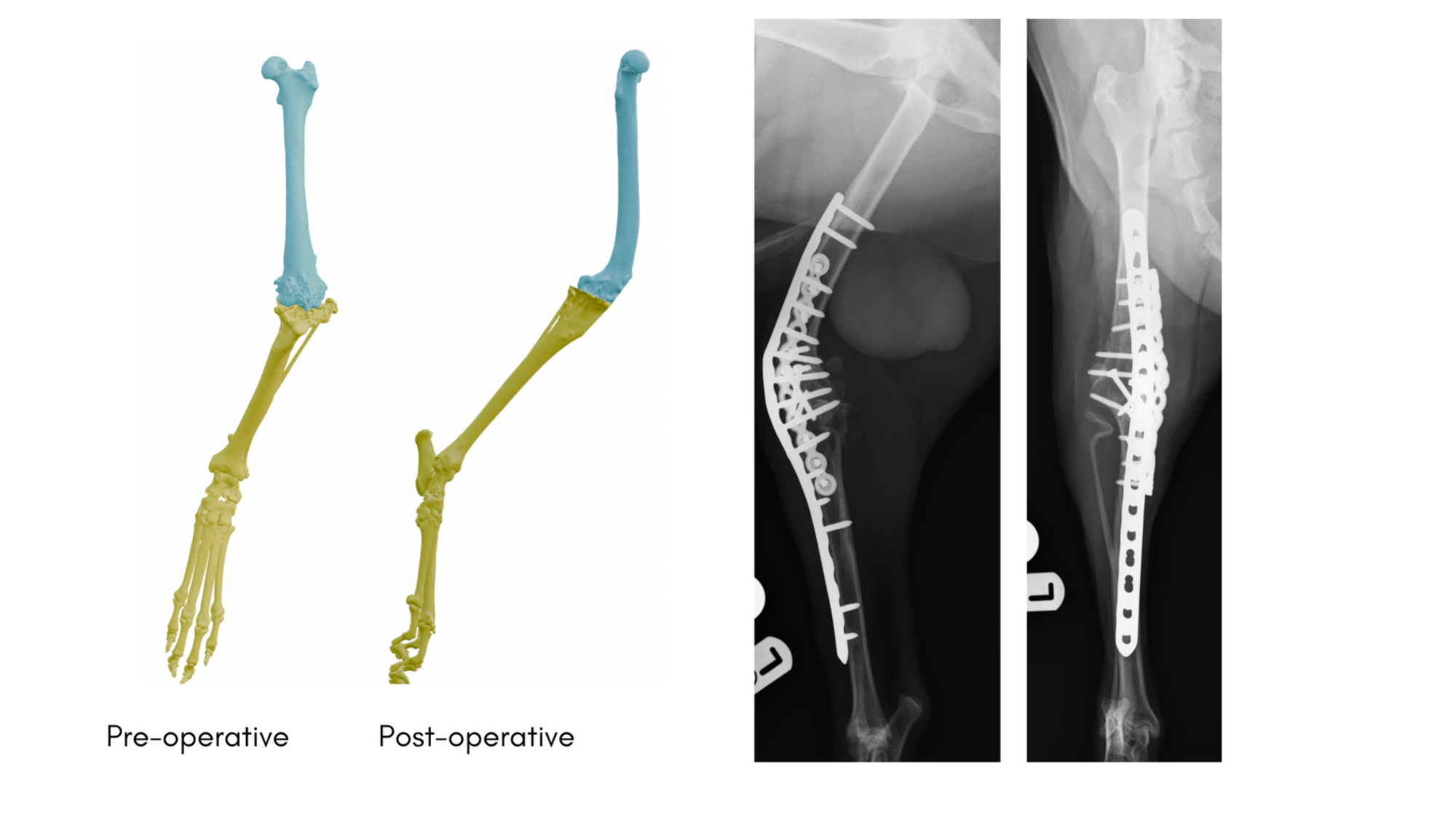
Arthrodesis aims to achieve permanent bony fusion across a joint. Its success rests on a few well-established principles: complete removal of the articular cartilage, accurate apposition and compression of the prepared bone surfaces, fusion of the joint at the correct functional angle, and rigid fixation maintained until union is achieved. Of these, restoring the correct joint angle is among the most difficult to judge reliably in theatre, yet it is critical to limb function and to the long-term success of the fusion.
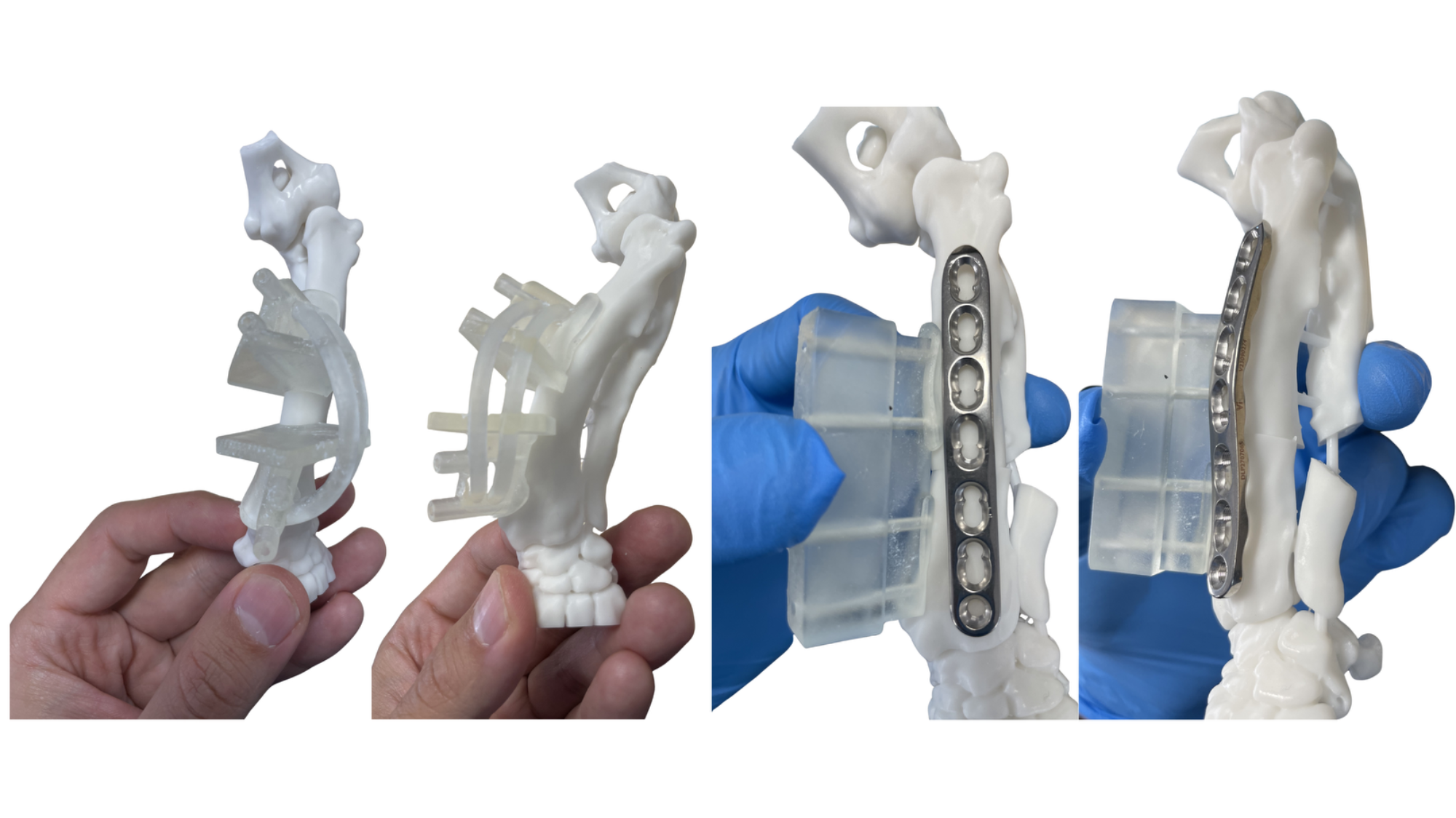
Patient-specific guides support each of these principles. The planned bone cuts and the predetermined fusion angle are built into the cutting guides, so the intended alignment is reproduced precisely rather than estimated during surgery, and the prepared surfaces meet as planned to allow effective compression. A printed bone model accompanies the guides, allowing the construct to be rehearsed and the implants pre-contoured in advance — together helping to achieve consistent positioning, stable fixation and reliable bony union.